Tuesday, August 5, 2008

Join us in Houston on March 6, 2009 for "Servant Leadership - The High Performance Link"

http://servantleadershipconference.com/
Servant Leadership-the High Performance Link, slated for March 6, 2009, will be held at the University Hilton at the University of Houston . This conference is a production of CEO Netweavers, the Greenleaf Center for Servant Leadership, and the International Society for Performance Improvement.
Its’ purpose is to shine the light on servant leadership at work, especially the powerful and unmistakable connection between true servant leadership in action and outperforming return on investment, operational excellence, and joy in work.
Along with a transformational conference experience, CEO Netweavers Houston will inaugurate the Servant Leadership in Action Award, to be announced and presented to a local servant leader as a conference highlight.
CEO Netweavers is a rapidly growing organization of CEOs and their trusted advisors dedicated to transforming organizations and enriching lives through application of the principles of servant leadership and the practice of netweaving.
The Greenleaf Center for Servant Leadership is an international non-profit organization founded by Robert Greenleaf in 1964. Its purpose is to promote the understanding and practice of servant leadership.
The International Society for Performance Improvement is the world’s preeminent performance improvement society.

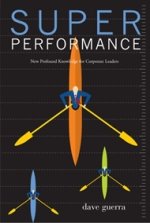
Servant Leadership is Super Leadership

Superperforming CEOs = Servant CEOs

It's a consistent, astonishing pattern.

Google’s Eric Schmidt, Berkshire Hathaway’s Warren Buffett, Harley Davidson's Richard Teerlink, SYSCO's John Baugh, SW Airlines' Herb Kelleher, IBM's Tom Watson, Medtronics’ Bill George, AIM's Ted Bauer, Sterling Bancshares' George Martinez and others - all of these can be described as men of uncommon humility and personal values. Most, if not all, could also be described as people of great faith. This begs a crucial question:

Is there a correlation between Servant Leadership and Superperformance?

In describing Servant Leadership, Robert Greenleaf wrote, " “The servant-leader is servant first… It begins with the natural feeling that one wants to serve, to serve first. Then conscious choice brings one to aspire to lead. He or she is sharply different from the person who is leader first, perhaps because of the need to assuage an unusual power drive or to acquire material possessions. For such it will be a later choice to serve – after leadership is established. The leader-first and the servant-first are two extreme types.” (italics added)

“The difference manifests itself in the care taken by the servant-first to make sure that other people’s highest priority needs are being served. The best test, and difficult to administer, is: do those served grow as persons; do they, while being served, become healthier, wiser, freer, more autonomous, more likely themselves to become servants? And, what is the effect on the least privileged . . .will they benefit, or, at least, will they not be further deprived?”

Is it actually possible to possible to achieve (or sustain) Superperformance without a CEO with a fundamental love for people?

Monday, August 4, 2008

Superperformers are always Green

When I’m green I’m growing, when I’m ripe I’m rotting.


Ray Krok


The Diversity of Superperformance is Biodiversity

The diversity of Superperformance is a biodiversity. Biodiversity is not just different people. It is also different work methods, different work styles, different approaches, different ideas, different answers. Biodiversity if the diversity of optimization.

Sunday, August 3, 2008

The Athlete Inside Us All


There is an athletic quality to Superperformance. Maximum fitness and peak performance are both associated with the qualities of an athlete. So too it is with organizations. The best organizations are athletic. They are both fit and well. Their fitness is reflected in their process and their wellness is reflected in their culture. Their fitness is a measure of their health. If your organization is struggling in either area it is being suboptimized. This is another reason that Servant Leadership is the pattern of Superpeforming CEO. Gregg Stocker's terrific book The Corporate Death Spiral outlines the 7 most destructive unhealthy habits of organizations. What are vital signs we should monitor continually?

Saturday, August 2, 2008

Transformation to Superperformance


We cannot become what we need to be by remaining what we are.
Max DePree

Superperformance is available to all, but it requires transformation to a new state. This is the same kind of comprehensive change that occurs when water turns to ice. Transformational changes of this type abound throughout nature - the epidemic transmission of a virus, the critical mass of a runaway social trend, metamorphosis of a caterpillar into a butterfly, and even certain emotional changes, like the process of falling in love. The change is comprehensive and dramatic. This is called a phase transition, a state change that occurs without altering a system’s underlying chemical composition. Phase transitions are sudden, non-linear, and system-altering. The physics of a phase transition are analogous to transformational change in other systems, including social ones. In a phase transition, as the energy, temperature or information passing through the system increases, the current threshold is approached and crossed, provoking a sudden, discontinuous, system-level change. First the system is operating at one level, then suddenly, another. While transformation is typically an achieved state, the physical change occurs suddenly, triggered by a slight increase in energy, temperature or information, as in the proverbial straw that broke the camel’s back. At this critical juncture, the tipping point, the system reaches a high level of disequilibrium, then finally gives way, becoming fundamentally altered as it experiences transition to the new steady state. As with any phase transition, transformation is always associated with an increase in energy, information or temperature. During the development of the adult butterfly, for example, the chrysalis loses nearly half its weight. This shows that the experience of transformation consumes tremendous energy. In the same way, upshifting to Superperformance consumes tremendous energy instituting new habits while simultaneously surrendering old ones.

New adventure


CEO Netweavers, The Greenleaf Center for Servant Leadership, and the International Society for Performance Improvement are joining forces to shine the light on Servant Leadership and its association with outperformance. Join us on November 4, 2008 for this new adventure in optimization. www.servantleadershipconference.com